August 22, 2026
What Made-to-Order Really Means
Four to six weeks, four bench stages, and one pair cast fresh for your size. What happens between Confirmed and Shipped — and what to settle before you commission.
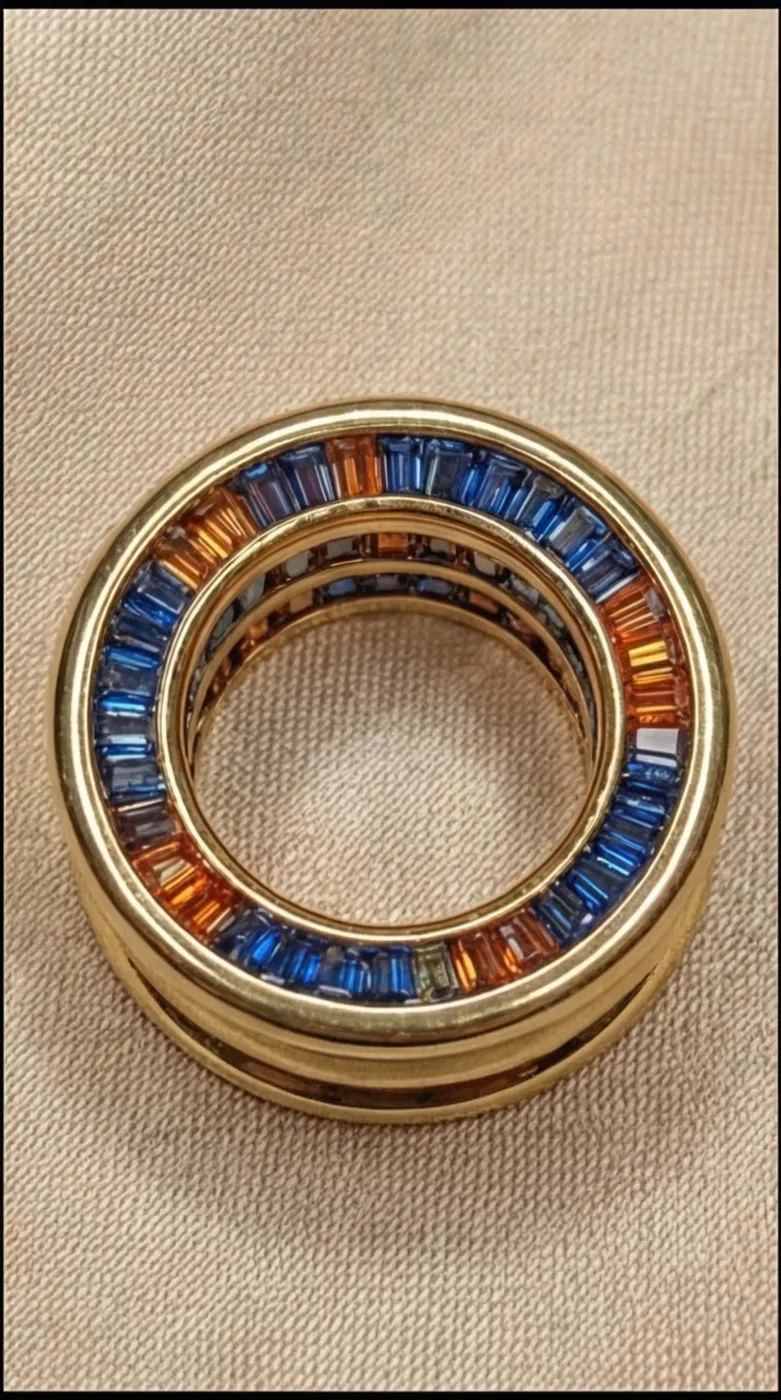
Nothing on this site exists before you order it.
That is not a positioning line, it is a description of how the bench works. When an order comes in, a wax or resin pattern goes into a flask, metal is melted, and a pair is cast for that order and that size. Before that moment there is no pair. Afterwards there is exactly one, cut to a diameter that may well be the only one of its kind we make this month.
This is what that means in practice, why it takes 4–6 weeks, and what you should decide before you commission rather than after.
Why not just keep stock
The honest answer is arithmetic.
We cut twenty gauges, from 3mm to 25mm. Multiply that by metal — 10k, 14k, sterling — and by stone choice, and a single design has more variants than most small studios will sell in a year. Holding one of each would mean tying up an enormous amount of gold in inventory that mostly sits in a drawer, and the cost of that gold would end up in the price of every piece.
There is a second reason that matters more. Stock forces standardisation. A studio holding inventory has to guess which sizes sell, and it guesses toward the middle — which is exactly why large-gauge wearers spend their lives being offered 10mm and told 18mm is a special order. Making to order means the 22mm pair is the same product as the 10mm pair, ordered the same way, at the same standard of finish.
The trade you make for that is time. Four to six weeks of it.
The four stages
Your order page shows exactly where a pair is, and the stages are real bench operations rather than shipping-software theatre.
Confirmed. The order is logged with its gauge, metal, stones and any personalisation. This is the point where sizing is checked against what you told us — and, if something looks unusual, the point where we write to you before anything is cut. If you have a question or a change, this is the window.
Casting. A pattern is made for your exact size, invested in a flask, burned out, and filled with molten metal. Casting is where the piece becomes a physical object, and where the largest amount of hands-off waiting time lives: flasks are prepared and burned out on a cycle, the metal has to come up to temperature, and the piece has to cool properly. Rushing any part of it produces porosity in the metal, which turns into pits in the polish later. Raw castings then need sprues removed and surfaces cleaned up before anything can be done to them.
Setting. Stones go in by hand, one at a time. On a fully iced face at large gauge that is dozens of individual seats cut and dozens of stones secured, and it is the single most skill-intensive part of the process. It is also where matching happens: the two faces of a pair have to read identically side by side, which means selecting and placing stones with the pair in mind, not each plug in isolation. There is no way to make this stage faster that does not show in the finished piece.
Polishing. The final finish, by hand, through progressive stages. This is what gives a solid piece the depth it has — and it is a genuinely destructive process in the sense that it removes metal, which is precisely why it can only be done properly on something solid all the way through. It is also the reason we can re-polish your pair for free for life: there is always more of the same material underneath.
Then it ships, and you get tracking.
Where the weeks go
People expect the metalwork to be the slow part. It is not — the slow part is the queue.
The bench works in batches: a casting run is prepared for several orders at once, because firing a flask for a single pair is wasteful in both material and time. If your order lands just after a run, it waits for the next one. Stone-set work then goes to setting in sequence, and setting cannot be parallelised because it is one pair of hands.
Four to six weeks is the honest range across all of that, including the ordinary friction of a small studio: a stone that arrives out of spec and has to be re-ordered, a casting with a flaw that gets scrapped and re-run rather than shipped. We would rather re-cast and be late than send something we would not wear.
If a piece is going to run past the window, you hear from us with the reason.
What to settle before you commission
Made-to-order pieces are final sale. That is not a policy chosen for convenience — a 17mm pair in 14k with your engraving is not something anyone else will buy — so the whole burden of getting it right sits in the ten minutes before you order.
Three things, in order of how often they go wrong.
1. Size. By a wide margin the most common problem. Measure the barrel of your current plug, not the flare, ideally with callipers. Do not trust the label on cheap acrylic; mislabelling by half a millimetre is routine and half a millimetre is most of a rung at the bottom of the ladder. Measure both ears — asymmetry is extremely common and we can cut a pair as two different sizes if you say so in your order notes.
The true-size visualiser draws each gauge at actual scale on screen so you can hold your current plug against it, and the full conversion table is in the mm-to-gauge chart.
If you are between rungs, size down. A slightly loose plug is comfortable. A slightly tight one is a stretch you did not choose, applied for as long as you wear it.
2. Timing against a stretch. Do not order a size you have not reached yet on the assumption you will get there in six weeks. Stretching runs on the lobe's schedule, not the calendar's: one millimetre at a time, six to eight weeks between jumps, and only on a fully healed lobe. Order for the size you are wearing now. The method is in how to stretch safely.
3. Weight. Solid gold at 16mm is a different object from acrylic at 16mm. That heft is much of the appeal, but it is real, and a heavy pair is not what you want in a lobe that stretched recently.
If anything is uncertain, write before you buy. That conversation is free and always easier than the one afterwards.
What happens after it arrives
The relationship does not end at the tracking number. Every piece carries the Lifetime Care Guarantee: free polish and re-finish for life whenever the pair dulls, no limit on how often, and repairs at cost — bent post, lost stone, cracked flare — for materials and bench time with no markup. Shipping to us is on you; shipping back is on us.
That guarantee is only possible because of how the piece was made. Solid metal can be cut back and re-finished indefinitely; a coating cannot. The argument in full is in solid gold vs. plated, and the day-to-day routine is in caring for gold and stones you wear every day.
Ready
Start with the material — solid gold or sterling silver — or browse the full catalogue from 3mm to 25mm. If the piece in your head is not on the site, that is what custom commissions are for.
Payment plans are available at checkout for larger pieces, subject to approval and the provider's terms; see financing.
Made to order
Browse the sizes currently available for each piece, or request another measurement through Custom.
Shop the gauges